
Searching for a Chatham County Warrant
The sheriff's office posts no public active-warrant search box, so a Chatham County warrant check starts with the likely court. Magistrate Court takes arrest and search warrant applications. State Court keeps misdemeanor and countywide traffic files, and Superior Court holds the felony records. Recorder's Court handles many traffic citations, and six municipal courts keep their own city dockets. CCSO Street Operations executes warrants, but it does not hold every court file. Before you call, gather the full legal name, date of birth, any case number, the court, the charge type, and a narrow date range, then share only the fields the office needs. Georgia's official guidance warns that sheriff practices vary and that an in-person inquiry can end in immediate custody. A person checking a possible warrant in their own name may want to call a Georgia lawyer first.
- Identify the likely issuing court and case type.
- Ask its clerk for current court status or an exact document.
- Use CCSO Criminal Street Operations for execution questions.
- File a court or police records request for a return or historical entry.
- For another county, contact that county's sheriff. GCIC is not public.
Chatham County Courts Split the Search
The official Chatham Courts gateway sorts visitors among the separate courts, clerks, forms, and electronic docket access in Chatham County. A file there may show that a warrant issued. Whether it was served, recalled, or still stands is a separate question.
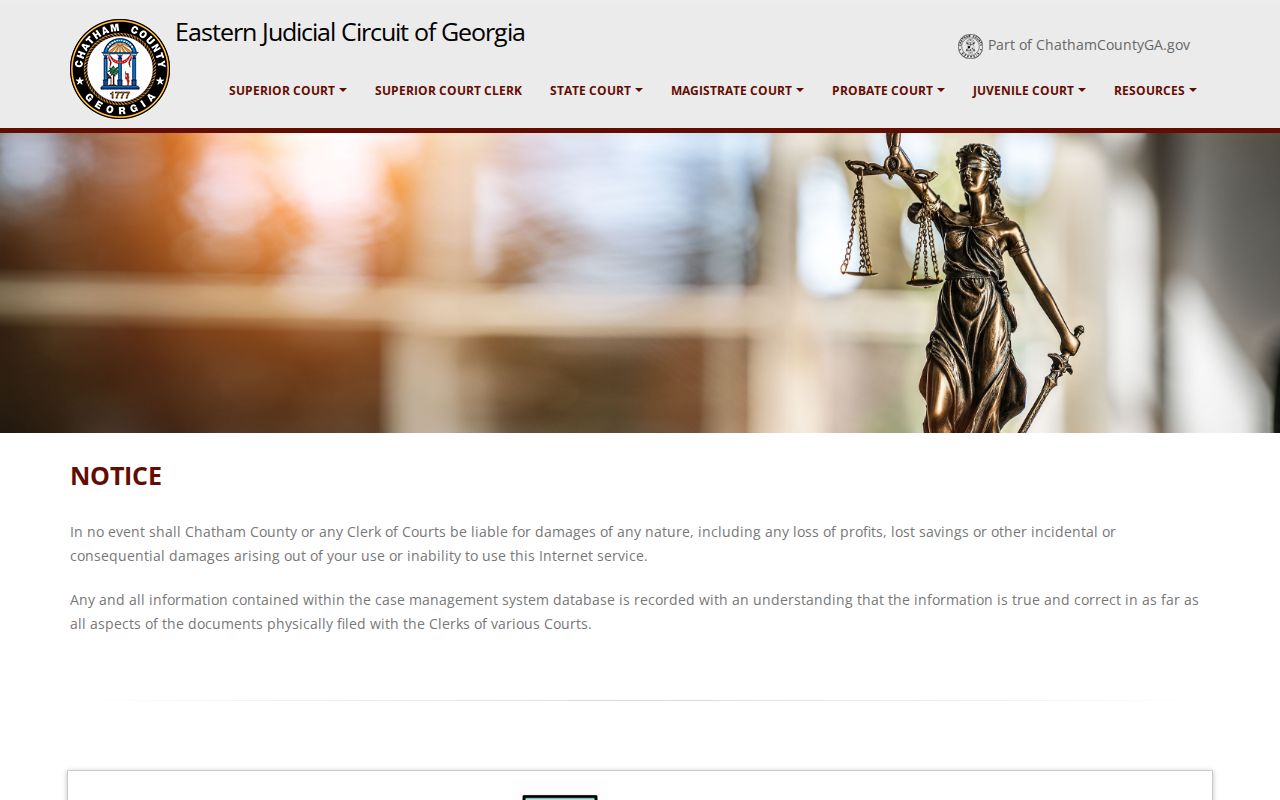
The gateway helps you pick a clerk, nothing more. It is not a countywide current-warrant list for Chatham County. Magistrate and Recorder's functions sit in the Coleman Courthouse. State and Superior clerks work out of Gadsden, and the right counter depends on the record you need.
Chatham County Warrant Search Fields
Chatham County request forms ask for different fields because each one pulls court records rather than a shared live roster. The Magistrate form allows a criminal search by name and also takes a case number and identity fields. On the State Court form, select "Criminal Warrant(s)." Ask for the smallest set of fields that can pin down the file. A common-name match never proves identity.
| Field Label | Type | Required | Notes |
|---|---|---|---|
| Full legal name | Text | Usually | Use the name tied to the case |
| Date of birth | Date | Office specific | Narrows common names |
| Case number | Text | No | Best key when known |
| Court and record | Description | For routing | Name the clerk and document |
| Date range | Date | No | Keeps the request focused |
CCSO Contacts for Warrant Status
The CCSO directory lists Criminal Street Operations at 912-652-7624 and 912-652-7620, while a 2026 Georgia Sheriffs' Association directory lists 912-652-7630 for warrants. The two official sources disagree, so confirm the current number on the CCSO page and ask which line covers your exact question. Booking, jail records, cashier, and lobby staff each do different jobs. For the steps after a bond decision, the CCSO bonding procedures walk through payment and release logistics.
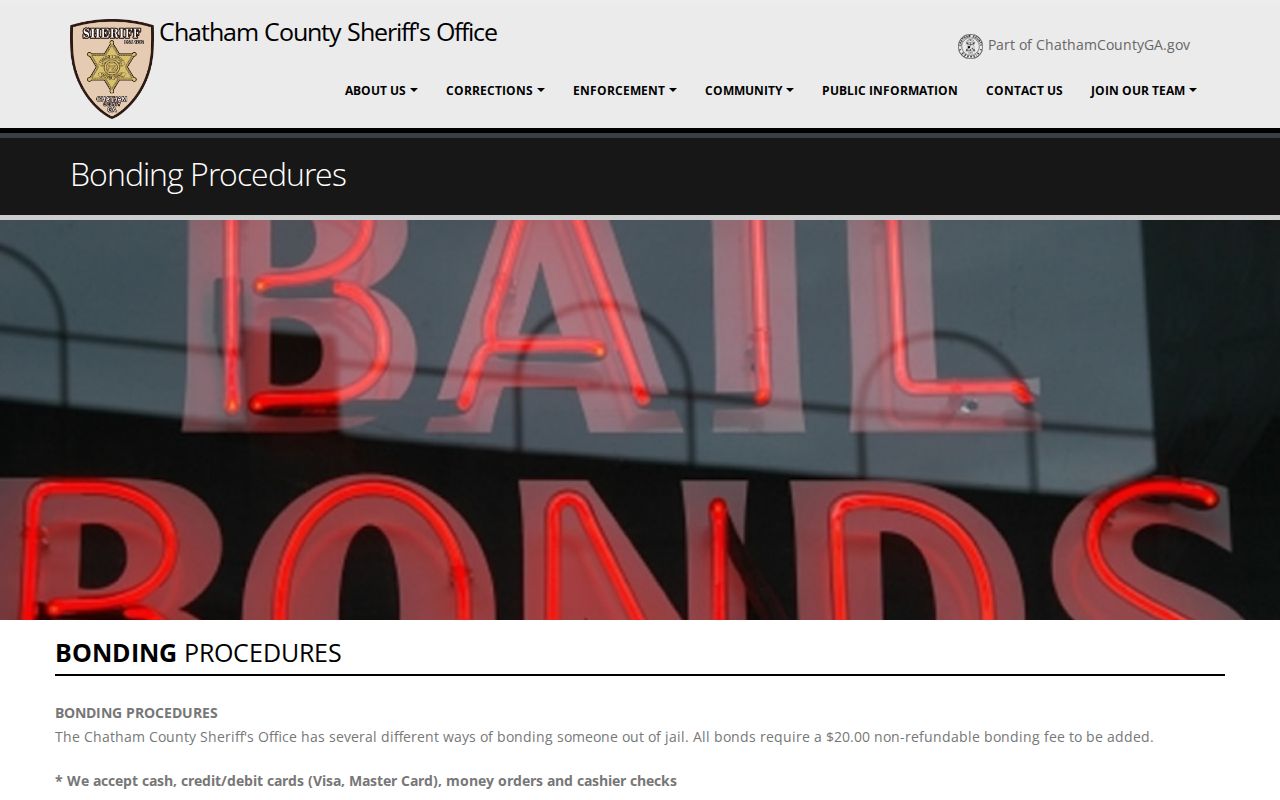
The cashier window handles real bond transactions in Chatham County. It will not read a docket, hunt for a warrant, or confirm that all process is cleared.
What a Warrant Search Shows
A responsive Chatham County file may show the court, the document, the alleged charge, the issue date, a bond entry, and a service notation. Read each field with its source date. "Issued" means the process was authorized, and "executed" means law enforcement acted. "Recalled," "quashed," or "cleared" points to later court action. Only the issuing court can say which entry controls now.
| Record key | A case number such as COURT-CASE-NO. |
|---|---|
| Document | Warrant, FTA entry, return, or bond order |
| Issuing court | The office able to change court status |
| Service detail | A dated return or agency event, when public |
| Status language | Must be read in context and confirmed |
Chatham County Bookings Are Different
CCSO posts recent 24-hour and 72-hour booking views listing arrest date, arrest number, agency, charge, and bond data. A booking is a custody event, not a Chatham County warrant lookup. Someone can be booked on several kinds of process, and an active warrant can sit outside a short recent-booking window. The official CCSO bookings page carries a no-warranty disclaimer.
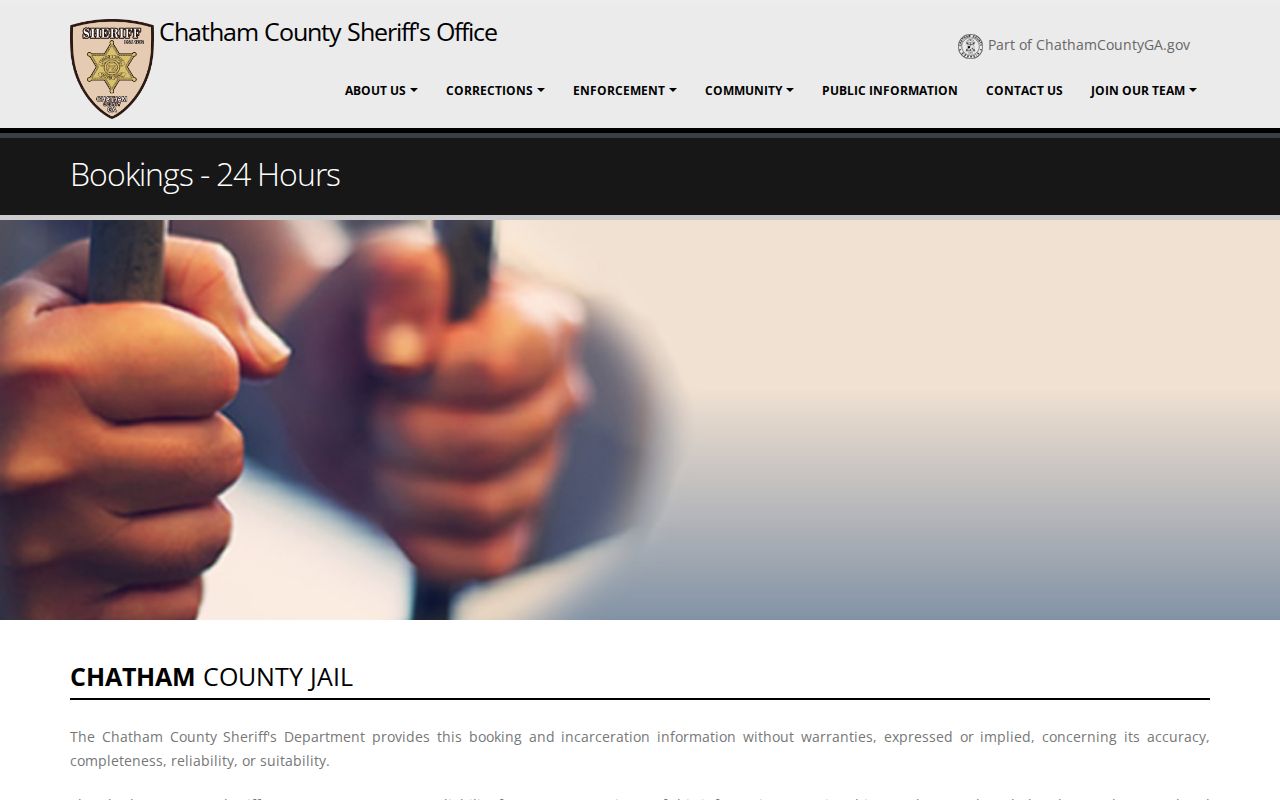
A blank view proves nothing either way in Chatham County. It does not show that no warrant exists or that older process was cleared.
Where to Check Warrants in Chatham County
Route your question to the office that owns the record. For a warrant application or preliminary-hearing record, call the Magistrate Court Clerk at 912-652-7181. State Court Criminal Division, at 912-652-7224, Option 2, holds misdemeanor and traffic files. Felony requests go to the Superior Court Clerk Criminal Division at 912-434-8920, and Recorder's Court handles its traffic and citation records at 912-652-7425. A city case starts with that municipal clerk. Execution and court records are separate lanes in Chatham County: CCSO can route a sheriff service question, while the clerk retrieves filings and confirms whether the issuing court changed its order. Georgia has no public statewide warrant search, and GCIC serves criminal justice agencies only, so expect no direct public access.
Chatham County Records Request Route
Name what you want in exact terms: a "criminal warrant document," a "bench-warrant entry," an "FTA notation," a "return or service record," or a "bond order." Fees differ by court in Chatham County. The State Court form lists a $1 simple-copy fee plus separate certification fees, the Magistrate form lists 25 cents per page with a certification fee, and Superior warns that an off-site file may need 48 hours while other forms allow up to five business days. Check costs and timing before you pay. The Georgia Open Records Act does not force an office to build a fresh "active warrants today" report it does not keep. A police request may seek an existing report or execution record, subject to exemption and redaction. Narrow scope, the right custodian, and a date range get a better answer in Chatham County than a blanket demand.
Restricted Warrants and Access Rules
Not every Chatham County record is open to the public. Juvenile files stay closed. Other documents may be sealed, redacted, or withheld while an investigation is active. A historical paper can sit in a case file long after its present status changes, so treat it as “record located” until the responsible court says what it means today.
Key Rules:
Sealed process may not appear in public records.
Juvenile warrants are not a public search category.
An absent result is not proof that no warrant exists.
Chatham County Scam Check
Chatham County courts do not clear warrants by phone. Any caller demanding money, gift cards, or an unofficial payment is running a scam. The sheriff states that outstanding warrants must be resolved through the court, so end the call and dial a published government number yourself. The CCSO scam warning states that rule in plain terms.
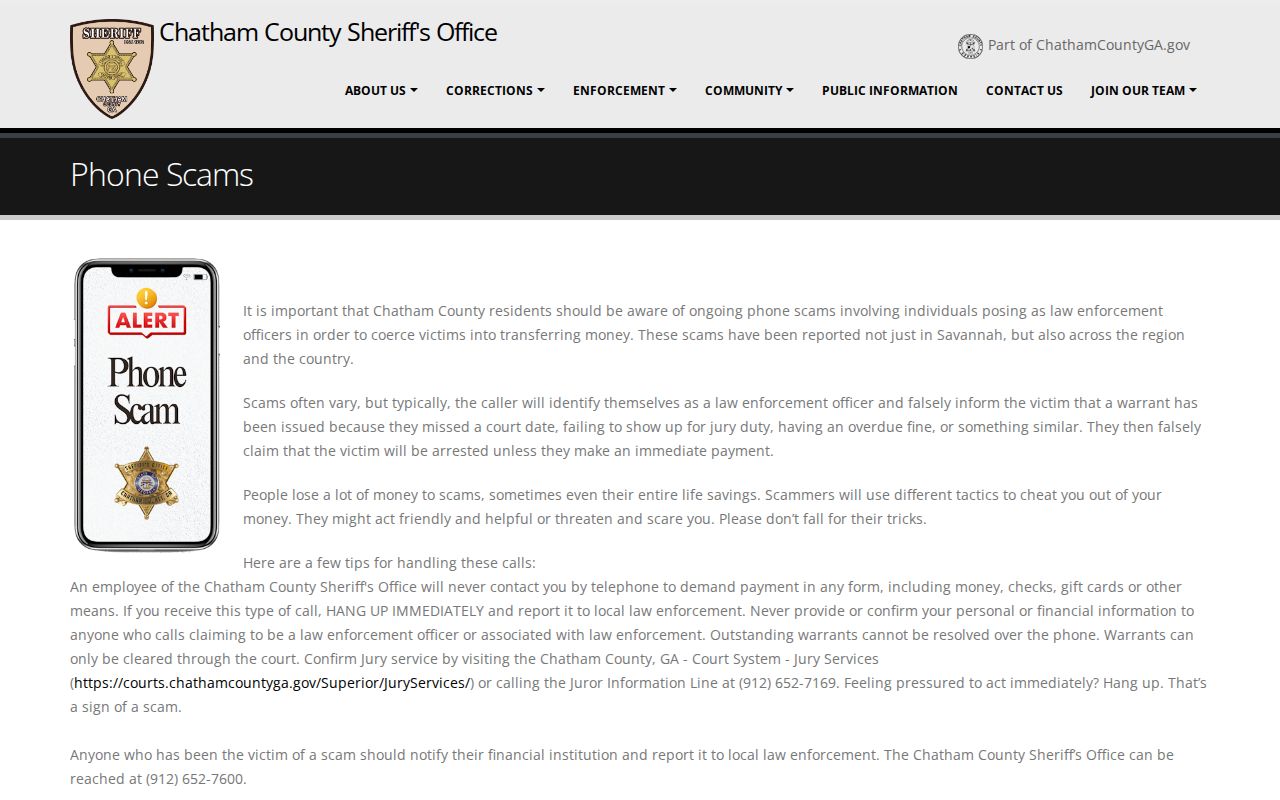
Real status and clearance questions go to the issuing court, not an unsolicited caller.
Chatham County Search Timing
How long a Chatham County records request takes depends on which office holds the file. Police records usually draw a response within three business days. Custom work can run longer. State and Magistrate forms warn that off-site files may need up to five business days. Superior Court puts a 48-hour delay on an off-site file. These estimates describe particular offices, not a rule binding every Chatham County clerk.
A docket entry can also lag behind service or a hearing. Keep your request confirmation. Note the date you checked. When an answer could affect an upcoming court date, call that court rather than waiting on a broad request. A copy request and a current-status question are separate tasks. For a recall or any other change, the issuing court remains the source.
Verify a Chatham County Match
A name alone is not a match. In Chatham County, verify the court, the case number, the date of birth when lawfully provided, the issue date, and the record type. Similar names prove nothing about identity. A city citation number likely belongs in a municipal portal. A felony case number belongs with the Superior Clerk.
When an office answers verbally, write down the office, the date, and the exact status word used. Do not turn “document found” into “active warrant.” Those are different statements. If the matter is personal, a Georgia lawyer can review the file and contact the court about a lawful next step.