
Chatham County Active Warrants Explained
Chatham County publishes no single active-warrant roster. The tools that do exist have narrow jobs. CCSO Bookings shows recent custody events. Court dockets show filings. Municipal portals show citation and payment data. The CCSO directory gives contact routes. None of them combines Magistrate, State, Superior, Recorder's, and every city court into a live list. "Outstanding" should only describe current process once the responsible authority confirms it, because an old warrant document can sit in a court file after service or recall. A blank portal can also miss a court, a restricted record, or a fresh update. Treat either result as a lead, not a final answer, and check Chatham County records with the office that holds the file.
Which Chatham County Office Owns Status
The official courthouse directory maps the Chatham County clerks who hold distinct case records. Magistrate and Recorder's functions sit at Coleman Courthouse. State and Superior clerk offices sit at Gadsden Courthouse.
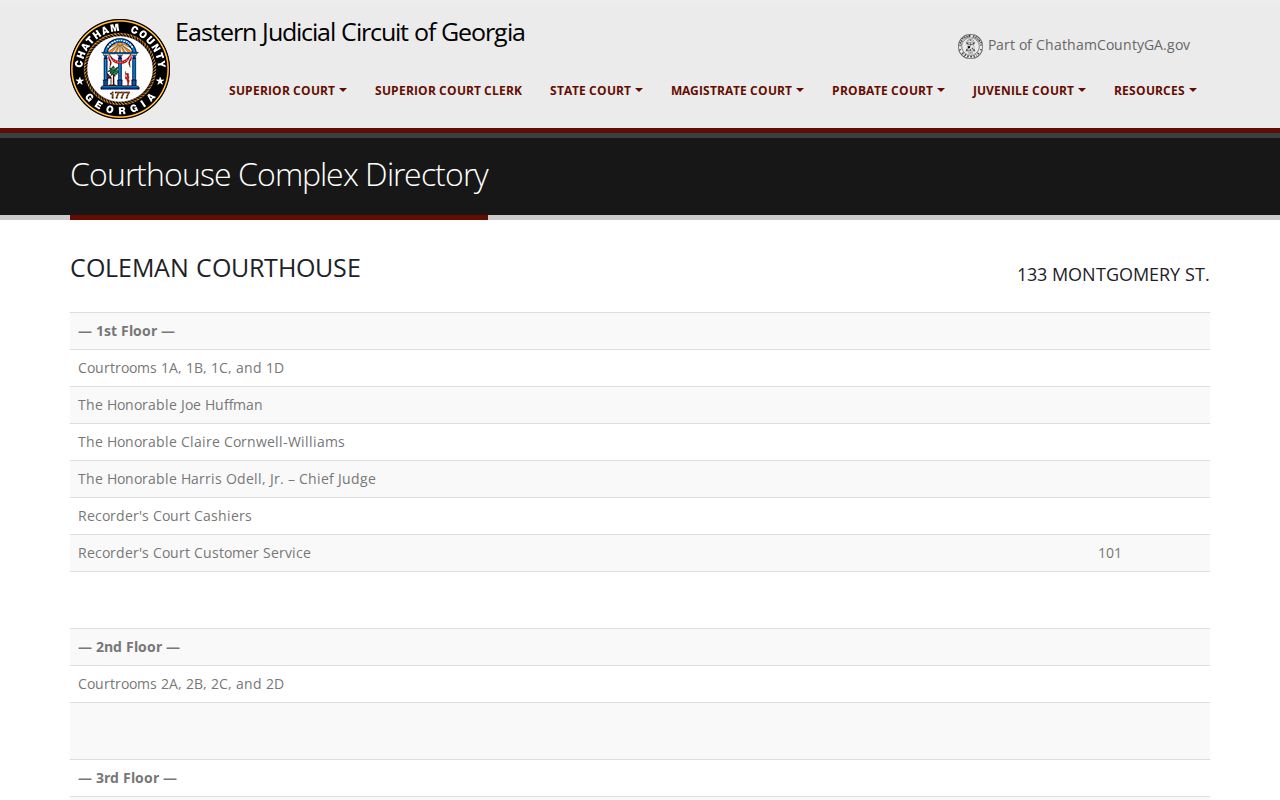
This split matters. The Magistrate Clerk holds warrant-application records. State Court keeps misdemeanor and traffic files. The Superior Clerk keeps felony files. Starting at the right Chatham County counter keeps a wrong-office reply from being mistaken for "no warrant."
How Chatham County Tracks Active Warrants
The issuing judicial officer creates the process. A clerk records the case event. CCSO Street Operations or another agency may serve it and make a return. Later, the court can recall, quash, or otherwise clear it. These acts happen in separate systems, so an undated list or copied result is weak evidence of a warrant's current status in Chatham County.
Chatham County CCSO also handles about 60,000 civil processes each year. Civil paperwork is not a criminal warrant. Those workload numbers describe the service load, and they say nothing about how many warrants are active right now.
Inside an Active Warrant Record
A solid warrant file names its source, case, court, and dates. Treat "active" as a label, not a status. Read the entries in order and ask the Chatham County issuing court which one controls. A posted bond or a release is one custody event, and it does not close every charge tied to the case.
| Case reference | Court identifier such as COURT-CASE-NO. |
|---|---|
| Issued | Judicial process was authorized or entered |
| Served or executed | An agency acted and may have filed a return |
| Recalled or quashed | The issuing court changed the process |
| Historical | A document remains, but is not a current-status result |
State Court Status in Chatham County
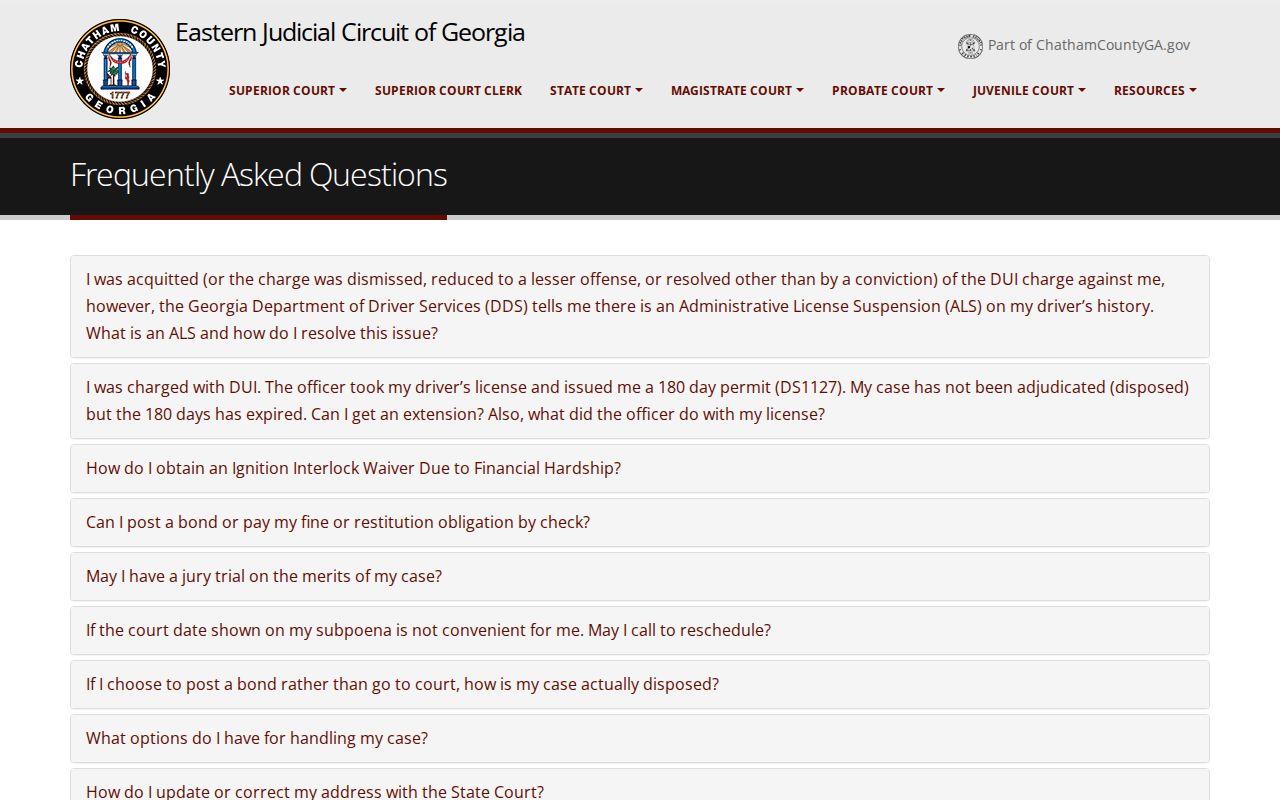
Per the State Court FAQ, arrest warrants in Chatham County usually follow a failure to appear or a failure to post bond on a subpoenaed charge. "Usually" is the word to notice. It is practice, not a rule that binds every court or case.
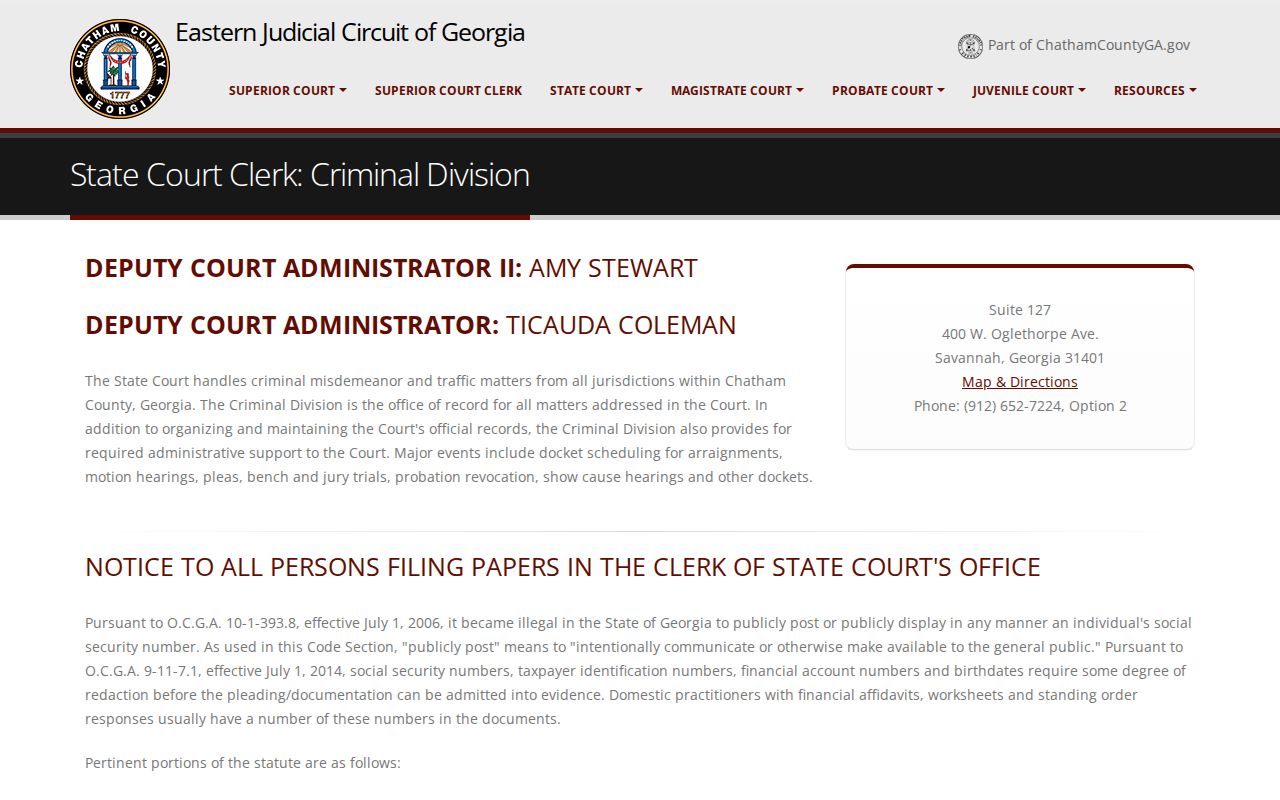
State Court Criminal Division in Chatham County takes misdemeanor and traffic matters from every jurisdiction in the county. For a current case event, call its clerk rather than trust a sheriff booking list.
Warrant Roundups and Most-Wanted Lists
A most-wanted page is a curated public-safety program, never a full inventory of active warrants. Savannah Police runs a Top 10 program with Crime Stoppers tip channels, but those picks do not cover every Chatham County outstanding warrant. A roundup works the same way. It reflects one defined operation and date, and it may spotlight only certain warrant types. For current details and safe tip instructions, go to the official program page. Never approach anyone on the list, and never act on copied data.
Chatham County Court Lanes
For Chatham County misdemeanor and traffic cases, the State Court Criminal Division is the official records lane.
Felony records sit with Superior Court. Magistrate Court handles warrant applications and preliminary hearings, while Recorder's Court takes many traffic citations. Municipal clerks keep their own city dockets, and juvenile matters stay restricted. Since Chatham County courts share no single public roster, a full warrant inquiry may take more than one of these routes.
When Your Name Is on the Warrant List
Hang up on unsolicited callers and never send gift cards. Work from the official court or sheriff directory. CCSO is clear that warrants cannot be cleared by phone and must go through the court. If custody is on the table, talk to a Georgia lawyer before you show up in person. A lawyer or the issuing clerk in Chatham County can walk you through an appearance, bond, recall, or whatever else fits the case.
Act through official channels.
Confirm the case and court, preserve any notice, and do not rely on a payment portal as proof that a warrant has been lifted.
Chatham County Municipal Records Gap
Chatham County's municipal court directory covers Savannah Recorder's Court plus courts in Bloomingdale, Garden City, Pooler, Port Wentworth, Thunderbolt, and Tybee Island.
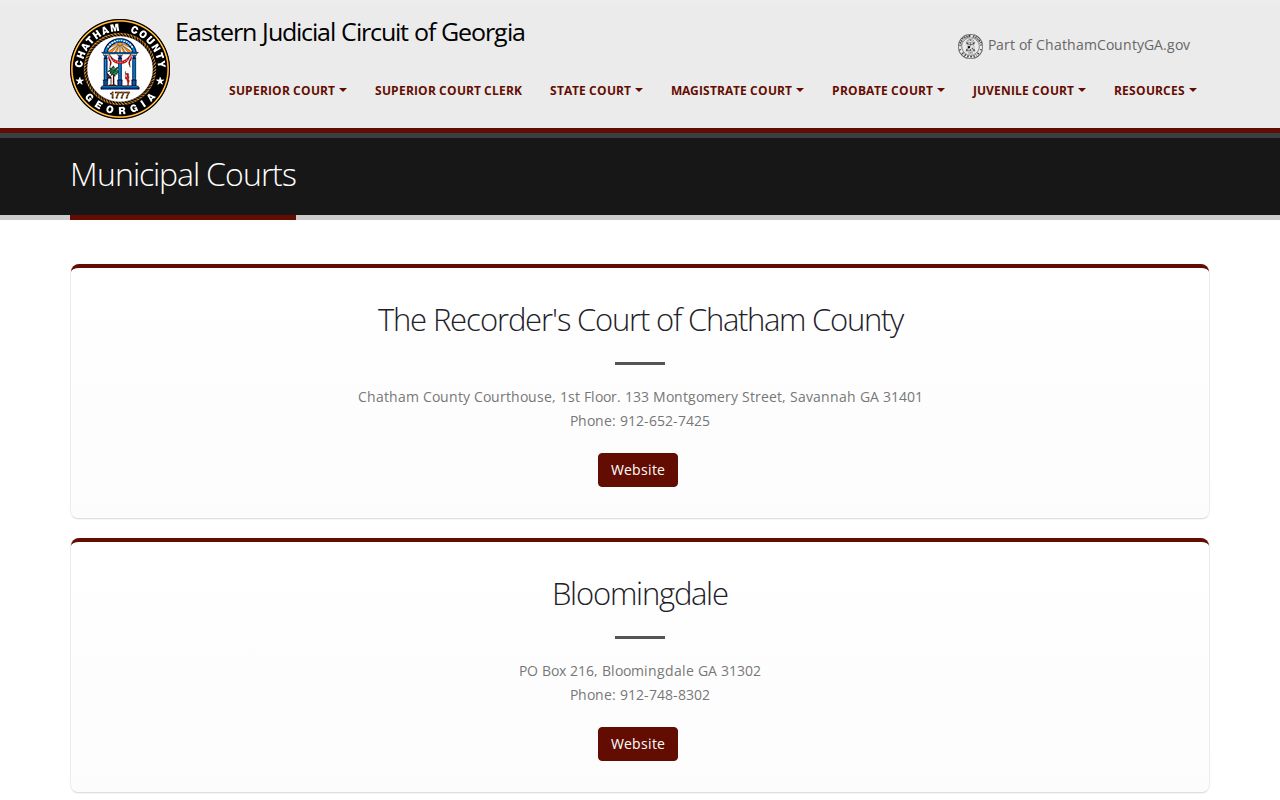
No shared database holds every city warrant in Chatham County. Garden City runs its own citation search, though with a processing delay, and Pooler's court-date link opens to a login. So an absence from the sheriff's list proves nothing about a municipal warrant. Call the issuing city clerk to learn its current status.
Requesting Chatham County Warrant Records
Chatham County copy requests work best when they are narrow. Name the court. Add the case number if you know it, a date range, and the item you want, such as a warrant document, FTA entry, service return, recall order, or bond order. State and Magistrate forms list different copy and certification fees. Off-site files add time. Check the form before you send it in. The Georgia Open Records Act does not force a Chatham County agency to build a new live list where none exists. Existing records can still be redacted or withheld for sealing, juvenile privacy, or an active investigation, so aim for a traceable record from the office that holds it, then confirm current status where needed.
Recent Chatham County Bookings
CCSO booking views track recent custody events in Chatham County. Each entry carries a no-warranty notice. You may see an arrest date, an arrest number, the arresting agency, a charge, and bond data. People enter custody through several forms of process. An unserved warrant, by contrast, may never appear inside a short booking window. So treat booking data as context for a known custody event, not as a warrant list. Then go back to the clerk for the actual case record. Jail staff can answer reception questions about a family member, but they should not be asked to rule on a court filing.
Chatham County Status Check Sequence
Begin with the latest court notice. Match court and case number. That tells you which Chatham County clerk to ask about an issue entry, a return, or a later recall order in the file. Ask the clerk directly. If service is the question, the current CCSO directory reaches Criminal Street Operations. A municipal case stays with the city clerk until that office explains county involvement.
- Identify the court and case number.
- Ask for the latest controlling entry.
- Ask the serving agency about a return.
- Keep the date and source of each response.
- Use counsel before appearing if custody is possible.
Chatham County City Warrant Limits
Keep city and county records separate in Chatham County. Savannah Recorder's Court, Garden City, Pooler, Port Wentworth, Tybee Island, Bloomingdale, and Thunderbolt may hold local citation or ordinance matters. A city payment result says nothing about sheriff execution status. A blank there clears nothing. It does not clear a State or Superior Court matter. Ask the municipal clerk what its own docket shows. Then use CCSO only for the part of the process the sheriff actually handles.