
Checking for a Pooler Warrant
Pooler's online-services page works like a switchboard, not a warrant database. The court-date, citation-payment, general-payment, and open-records links each answer a different question. Start with the ticket itself. Write down the court, the citation or case number, the appearance date, and the agency involved before you touch any form, and never paste private identifiers into an unrelated Pooler search.
- Use the Pooler online-services index and choose the task that matches the document.
- For a city court date or possible FTA, follow the court-date route and call the city when access requires a login.
- For an existing police record, use Pooler's official records link or NextRequest.
- For a county court warrant document, contact Magistrate, State, or Superior Court according to the case.
- For execution status, verify CCSO Street Operations contacts; talk with a Georgia lawyer before appearing if the matter may be yours.
Georgia publishes no statewide public warrant search. GCIC access belongs to criminal-justice agencies only. So a blank vendor screen or a fresh Chatham booking view cannot certify that no Pooler warrant exists.
Pooler Warrant Service Routes
Pooler's service page draws clear lines. Citation payment covers an eligible amount. Court dates are scheduling. General online payments reach city services beyond the court, and open records retrieves documents the city already holds. None of those lanes is a warrant roster, so a result in one says nothing about the other three. The official route map lays out each service separately.
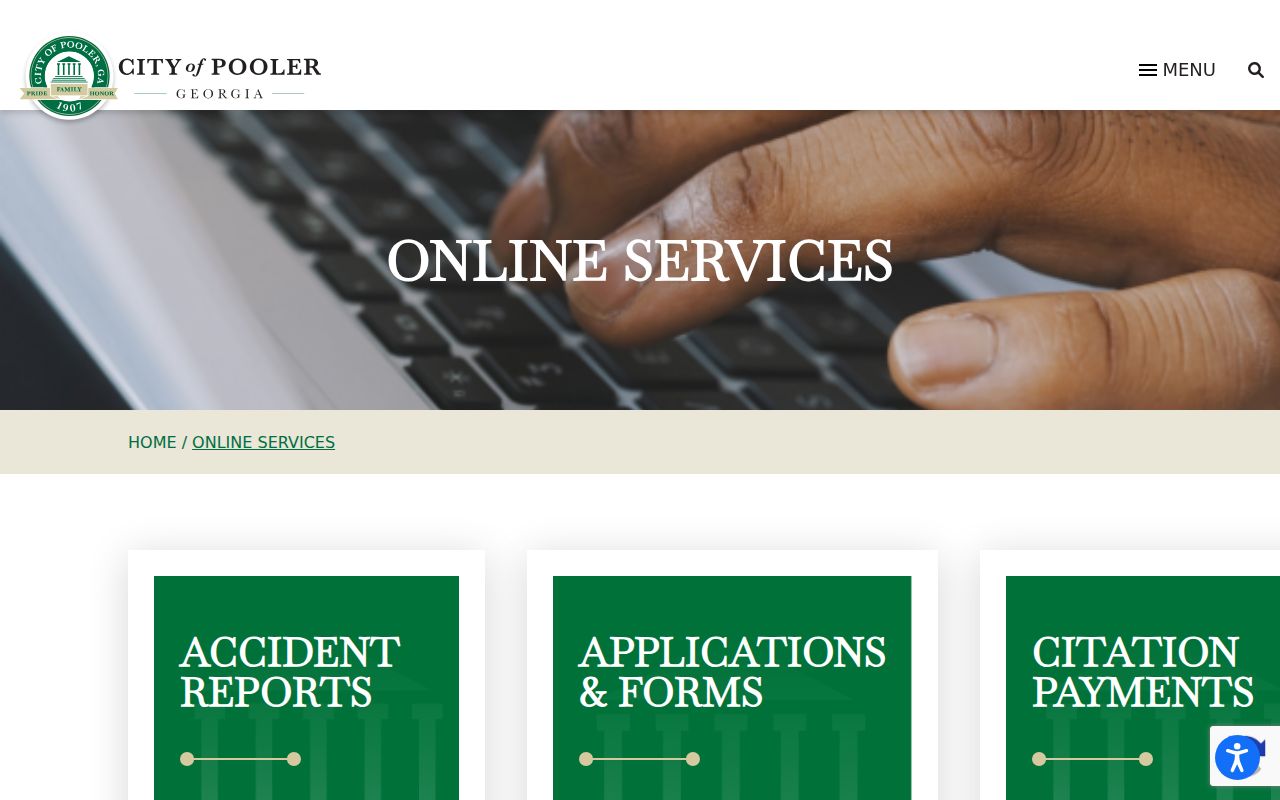
The labels guard against a common mistake. A payment link is not a Pooler warrant roster. Use the vendor only after the court confirms the citation is eligible and payment is the right step.
Pooler Police and Municipal Court
Pooler Police and City Hall share one address: 100 US Highway 80 SW, Pooler, GA 31322. City Hall answers at 912-748-7261. Police pick up at 912-748-7333. The department handles police services and its own records, while the municipal court runs the city's citation settings and court actions. Neither office speaks for a different Chatham court.
Pooler Police Department
100 US Highway 80 SW
912-748-7333
Use police for police-held records and agency routing.
Pooler city services
912-748-7261
Use the official index for court dates, citations, and public-record requests.
After-hours police and fire dispatch for Pooler is 912-652-6500. Emergencies go to 911. Neither number replaces the court clerk for a Pooler warrant status question. The official Pooler Police source posts the department's contact and records routing.
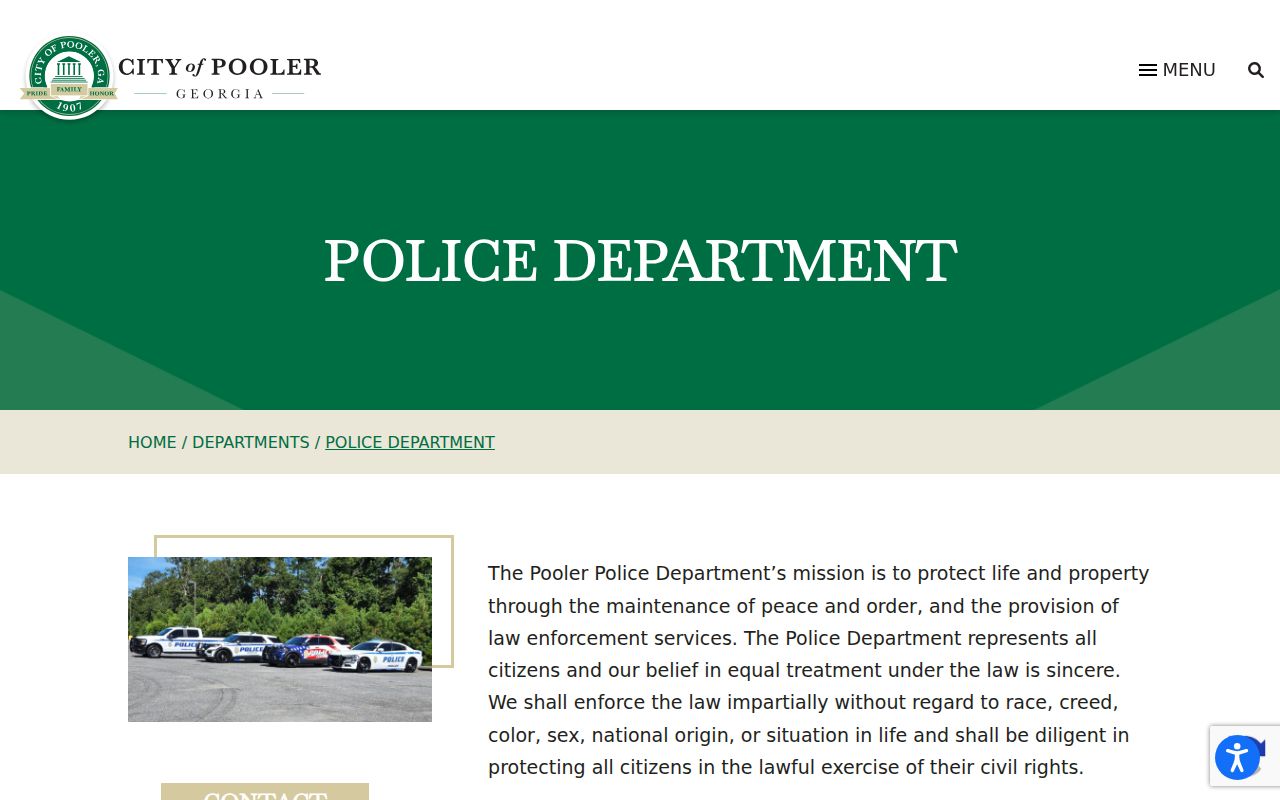
The Pooler police page supports contact and records routing; it publishes no public warrant list.
Pooler Warrant Portal Login Limits
Courtware opens behind a login. Pooler's service index sends court-date lookups there. The screen asks for email, password, and a remember-me box, with no open public Pooler warrant search in view. A login wall does not prove records are private. Missing results do not prove that no case or warrant exists.
Portal limit: If the linked court-date service requires credentials, call Pooler through its official city contact and ask how the public can confirm a personal court date or FTA status.
Narrow the task before you call. Ask whether the issue is a court date, a missed appearance, a warrant entry, an eligible fine, or a record copy. Staff can then route the call quickly. It also keeps a Pooler vendor from being overstated.
Pooler Warrant Types
Pooler residents run into several kinds of court process, and the city publishes no single label set. Traffic and ordinance matters usually stay in municipal court. Miss a date, and a judge can issue bench process. A probable-cause arrest warrant can start before a judge and land in Magistrate, State, or Superior files, depending on the charge.
| Type | How it may arise | First confirmation |
|---|---|---|
| Traffic warrant or FTA | Missed city citation setting | Pooler court contact |
| Ordinance process | Unresolved municipal matter | Municipal court |
| Bench warrant | Court response to nonappearance | Issuing clerk |
| Arrest warrant | Probable-cause finding | Magistrate or later court |
| Search warrant | Authority to search for evidence | Record custodian, subject to limits |
Application is not issuance, and issuance is not service. Keep those stages separate when reading any Pooler warrant record.
Pooler Warrant Record Requests
Pooler routes public-records requests through NextRequest. The portal notes that the Georgia Open Records Act governs the city's responses, though exemptions or confidentiality can limit release. The city need not create a record it never kept. Fees can attach to search, review, redaction, and production. A precise request usually beats a broad demand. The Pooler NextRequest source spells out those terms.
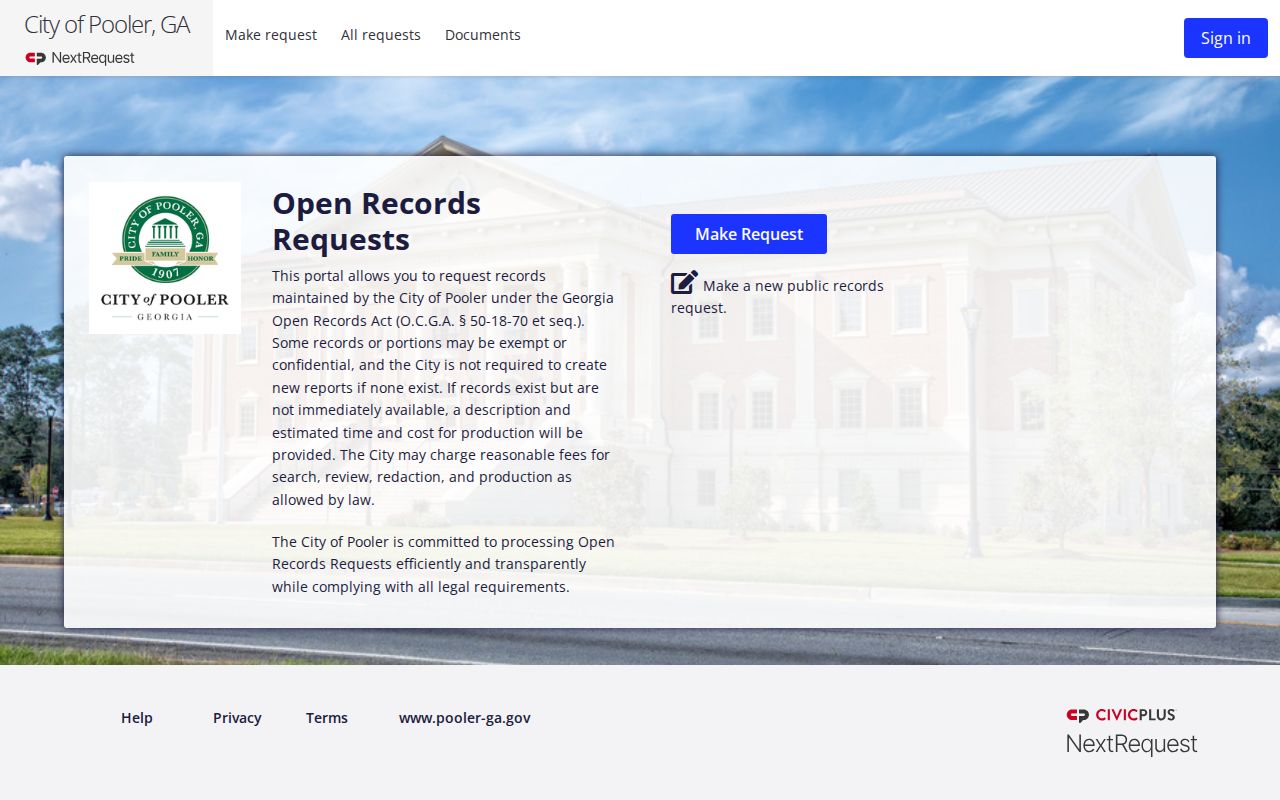
Ask for an existing report, service record, or named document in a date range. Be precise. A demand for a today-dated all-person active-warrant list may ask Pooler to create a record it does not keep.
Inside a Pooler Warrant Record
Every Pooler court or police record needs context. A case number ties events within one docket, but it will not search every city and county system. A fine amount shows what was due at one point, not that payment alone recalls a warrant. Read each status term next to its date.
| Citation or case number | The source identifier, shown in notes as POOLER-CASE, not a universal format. |
|---|---|
| Name | The subject listed by the official record. |
| Charge or event | Allegation, FTA, issuance, service, or later court action. |
| Issuing court | The clerk responsible for court-status confirmation. |
| Bond or fine | A source-specific figure that may not be payable online. |
| Status date | The point in time represented by the entry. |
Check for a later order. Only the issuing court can confirm that a Pooler warrant was cleared, recalled, or quashed.
Pooler Warrant Search by Task
People say warrant search while meaning four different errands. Going to court? Ask for the next setting. If a ticket is payable, confirm eligibility before using the vendor. Need proof? Request the existing docket entry or certified Pooler court record. Concerned about service, contact the responsible agency or seek counsel.
- Court-date question
- Asks when and where a Pooler matter will be heard.
- Payment question
- Asks whether an eligible citation may be resolved by an approved method.
- Record question
- Asks for a document already held by the city, police, or court.
- Status question
- Asks the issuing court whether process is issued, served, recalled, or otherwise changed.
Keeping those four questions apart prevents false conclusions from a Pooler vendor screen built for one job only.
How Pooler Warrants Fit County Systems
Pooler cases do not pool into one shared Chatham warrant database. The municipal court keeps its own docket. Pooler Police keeps its own enforcement records. Chatham Magistrate Court takes many warrant applications, State Court handles misdemeanor and traffic files, and Superior Court holds the felony files. When a court issues a warrant, CCSO Street Operations serves it. For the wider court map, see the Chatham County warrant records overview.
Warrant flow: Pooler court or police › responsible Chatham court › Pooler Police or CCSO service › return to the issuing court
Two more pieces stay outside any Pooler warrant lookup. Georgia GCIC is an agency network rather than a public search tool, and county booking data only reflects recent custody events.
Pooler Warrant Growth Context
The 2020 Census counted 25,711 Pooler residents. That number shows how fast the city has grown. It says nothing about how many Pooler warrants exist or who holds one. Never treat population as a stand-in for court activity.
A busy city like Pooler gains when court-date, payment, records, and police routes each carry a clear label. Warrant status still comes only from the authority responsible for it.
Pooler Warrant Safety Checks
Stick to links you reach from Pooler's official pages, and treat any demand for immediate payment as a red flag. Check it against a published city number before you act. Never send gift-card codes or money to an unofficial site. Pooler Police can route police matters, the municipal court can confirm city court procedure, and a lawyer can weigh your personal risk before you appear. If a service goes down, resist the pull of unofficial people-search sites. Save the date and the error message, call the city, and ask for another public method; a portal failure is a technical event, not a warrant result. Note: An emergency belongs with 911, while records requests, court-date questions, and warrant-status questions each run through their own official channels.
Pooler Warrant Records and Public Access
Pooler public records still answer to Georgia law, with limits. Investigative information may be withheld or redacted. Sealed, restricted, and juvenile files carry extra protections and do not surface like ordinary records. A city response can hand over what it holds without confirming real-time warrant status at other agencies.
Key rules:
Georgia Open Records Act, O.C.G.A. §§50-18-70 through 50-18-76 supports access to many existing records while allowing exemptions, redaction, and lawful charges.
O.C.G.A. §17-4-40 describes probable-cause authority behind Georgia arrest warrants.
Georgia juvenile-record restrictions place juvenile material outside ordinary public access.
Treat any Pooler record as proof only of what that source said on that date. The issuing court confirms live process.